Wednesday, April 30, 2025

Blog Post #12

 My Relationship with Technology

    As a teenage girl in today's digital world, it feels like my whole life revolves around my phone. Constantly I am checking who texted me and mindlessly scrolling through social media. I spend hours and hours a day on my phone. While I know this is incredibly unhealthy, I struggle to stop myself from checking my phone. I also have ADHD, which means I constantly am searching for dopamine sources and stimulation. My phone temporarily provides these things. I rely on it to communicate with my friends and seeing what they are doing. I have basically 24/7 access to them. This can be incredibly detrimental to me. When someone doesn't respond, I find myself worrying about why they aren't. Are they mad at me? Did I do something wrong? My brain doesn't immediately assume they are just busy, I assume I did something wrong. This is incredibly detrimental to my mental health as sometimes this can determine my whole attitude towards the day. In the last month or so, I really started to understand how detrimental this is. I decided that my goal for the summer would be to break my own cellphone addiction. 
    

    Not only does my phone and other technology such as my laptop provide access to my friends, but it provides me with access to basically everyone in the world. Everyone in the world can see what you are posting. Your digital footprint never leaves you. My parents have always instilled in me how important my digital footprint is. They are constantly monitoring what I post and how others may perceive it. Through them, I have learned to self-monitor my own actions. I understand that the way society perceives me is incredibly important, especially when I want to enter such a public career field such as sport. I have seen numerous of my friends get in trouble for the things they have done or posted online. I had a girl on my lacrosse team in high school get kicked off the team because of what she posted. The image you convey online might be the only one people see of you. Even one poor misrepresentation of you online could sway hundreds of people's opinions on you. They don't have the chance to know the real you. I always like to use the rule, would my grandma be happy if she saw what I posted or what I said. This helps me regulate the things I put out on the internet and social media. 

    This global access can be detrimental in more ways than one. Being exposed to online "influencers" and people experiencing incredible things can cause people to compare their lives to the content they are engaging with. Social media is only a highlight reel of someone's life. You do not see what goes on behind the scenes or someone's actual personality. However, the glorification and importance placed on social media in our world today has led us to worship these "influencers". Anything that they post on social media is consumed by hundreds of thousands or even millions of people. The societal pedestal we have put these people on has caused harm to the younger generations. Teens especially struggle with comparing themselves to online figures. Teens begin to be more self conscious and have unrealistic appearance expectations, leading to a decline in mental health. Also many of the influencers we see are using filters, editing and getting plastic surgery to optimize their appearance. This creates unrealistic expectations for teenagers. Teens, myself included, often fail to see that this is unrealistic. Comparison continues to occur. A study published by The Cybersmile Foundation found that nine in ten people from the ages of 16 to 24 responded that they see themselves negatively and feel dissatisfied with their life because of social media. This study also says that three out of four want to change aspects of their bodies, one in seven admit to having thoughts about ending their life because as a result of social media platforms.
I struggled with this for most of my high school life. In recent years, the quote "comparison is the thief of joy" has really impacted me and they way I think. I have learned to stop worrying about the way people see me or how I look compared to someone else. Knowing that I am happy and doing the best that I can is enough for me. 


    Additionally, people in today's world no longer live in the moment. Everything has to be captured on your phone. I went to a concert over break and I did not see one person without a phone. Rather than watching the concert, they were watching through their phone camera.  The second mini video I believe is an accurate representation of what will to happen in our society if this change is not addressed. We need to go back to a life that doesn’t just revolve around a cell phone or other forms of technology. As in that video, everyone was disengaged. It truly opened my eyes to the fact that I can be like that too.


    While I just listed many negatives about technology, technology has revolutionized the way that we live. I am grateful to be in an era of incredible development. I have access to all of the information I could ever need. I am able to connect with my friends at any time no matter how far they are. I am able to share pictures of my life with relatives I see maybe once a year. Technology has allowed for an unprecedented level of connection in our world. Communities from all over the world are able to interact and share ideas in seconds. Technology has allowed for innovations in the medical field and automated dangerous work. When used correctly, technology is an incredible tool. I hope to create a more positive relationship with technology as I continue to grow as a person. 

Monday, March 3, 2025

Blog Post #11

 EOTO Presentation #2

        During these presentations, one thing in particular stood out to me. That was the idea of "gatekeeping". Gatekeeping has become a popular social media term that means "the intentional withholding of information, knowledge, access, or opportunity - keeping these things all to yourself". This term is often used when online personalities do not reveal details about little things such as the music they listen to or the clothes they are wearing, creating a feeling of exclusivity. However, gatekeeping within the government is an incredibly important issue that limits access to different information. Gatekeeping refers to filtering information for decimation. The government uses this to hide certain things from the American public. It changes how we receive information. 

    Gatekeeping is not only used by the government. In the 1950s, gatekeeping was brought into the newsroom. News anchors were able to limit the information they shared to the public. This led to an imbalance in power dynamics. Those in charge of creating news scripts now had power over the American people. The American people began to receive filtered information without their knowledge. People were unaware of what they were missing.  


    Since then, gatekeeping has been used in many different fields. Gatekeeping is prevalent in Hollywood. There is a place known as "Bohemian Grove", a secret elite retreat in California where different powerful figures go each year. Ranging from former presidents to CEOs and musicians, the details are unknown. They all partake in grand discussions and unusual rituals, but no one knows exactly what goes on. The public has begin to question why these people attend this retreat and the purpose of it. Why do all of these powerful figures gather together? Is there something bigger behind the scenes that the public is not aware of? It is likely the public will never find out. 

    Gatekeeping has also being used countless times in the science world. It is commonly believed that the cure for cancer has been found. However, the economic impact of the cancer industry has caused the scientists who made this discovery to be silenced. Large medical companies make billions off of cancer treatments, CEOs of these companies do not want to lose this revenue. The same thing goes for Covid. Many companies made millions or even billions off of products necessary to survive covid or prevent covid. Hand sanitizer, masks, paper goods, and even vaccines are all manufactured by companies trying to make a profit. Again, these CEOs do not want to lose huge streams of revenue. 


    One of the most interesting examples of gatekeeping came from the music industry. The idea of artists selling their soul to some "power" or "Illuminati" was not something I was aware of until this year. The various conspiracies and secret meetings between artists however does lead me to believe there are some dark industry secrets. There have been numerous examples of artists speaking out against these secret societies who then suddenly face different controversies or career failure. One of the most notable being Kanye West. When he attempted to expose these controversies, his career and his public image suddenly faced a steep decline. The real reason could absolutely be due to his mental health, however, it is unclear. 


    While gatekeeping does play an important role in learning information from the government, we still see this idea impact countless other elements of our lives. Gatekeeping is a dangerous tool to prevent the spreading of information. Transparency must be advocated for. 

Blog Post #7

 Antiwar

    While I had heard the term antiwar, I previously did not comprehend what other ideas came along with this. Antiwar is not just being opposed to war, it is about taking efforts away from foreign policy. Antiwar activists do not believe that we should not be completely uninvolved in global affairs or to prevent conflict, they simply believe more effort should be placed in fighting domestic issues. Many antiwar individuals are advocating for a stronger voice in the government and to limit the centralization of the current US government. They are advocating for problems to be solved and promote "freedom" once again. 


    Not only are they advocating for individual freedom, but they are advocating for more viewpoints to be shared. They are advocating for different opinions in the media. They are asking citizens to become more informed. Citizens should hear multiple viewpoints and receive all of the facts about different situations in order to determine their stance on a particular issue. The media today has become overran by wealthy individuals with different agendas. The media is no longer about informing the public, it is about pushing the agenda that either benefits the owner of the media company or making money. 


    In an article published by the Daily Take Team in 2014, the referred to the media as "infotainment". Infotainment is essentially all about attracting people to watch and the money that increased viewership brings in. The interests of promoting positive things for citizens or our country are no longer important. The media just wants to bring in money. Reporting on war and other conflict is a perfect way to do that. Not only that, but back in 2003 before the invasion of Iraq, MSNBC was owned by an electric company that makes billions of dollars from war. One of their hosts that was opposed to this invasion then suddenly"stepped away" from the network. Media networks are constantly showing support for war and hosting guests to show their support as well. The public is not being exposed to these antiwar opinions largely in part to the economic impact of war. 

    After exploring these websites, many of their ideas caused me to think and evaluate my agreement with. the government's actions. With so many Americans struggling with hunger, homelessness, and addiction, I began to question the importance of foreign policy. There are so many different issues that must be tackled in our own nation to promote individual freedom, which reflects the principle ideas our country was founded upon. I believe that in order to promote growth as a nation, our government must place more interest with it's own citizens. I also believe that antiwar voices should be promoted more in mainstream media. While I am not sure I agree with all of their ideas, I still believe that it is our right to be exposed to these ideas. As citizens, we have the right to receive unbiased information. While this may be difficult, promoting and exposing the economic interests of many mainstream media networks will be critical for creating a more informed America. 

Tuesday, February 18, 2025

Blog Post #9


 Propaganda 


    The Cambridge dictionary define propaganda as "information, ideas, opinions, or images, often only giving one part of an argument, that are often broadcasted, published, or in some other way spread with the intention of influencing people's opinions".  When the word propaganda is brought up, many people's initial reaction is to think of World War I and Nazi Germany. Adolf Hitler used propaganda to influence the German public into believing they were fighting "a defensive war" and nationwide support was needed to fight this war. German propaganda was so prevalent because leaders feared the public would become influenced by other nations as they found out about the mass genocides. They did everything in their power to lie and convince the nation that things were not as they seem. To me, propaganda is simply lies told, usually through the media to sway public opinion or cover up the actions of the government. Propaganda does not just come from the government. Every day we are exposed to media with extreme bias to convince us to agree with their opinion. Many Americans no longer take the time to learn the truth, they are simply influenced by the media. 

    Propaganda has been used in the United States countless times. Throughout history, it was used in both World Wars to garner support for the war from the American people. During WWI, it was used as a recruiting tactic to encourage young men to join the military. The famous image of Uncle Sam with the words "We Want You" is one of the most famous images to help sway Americans into believing joining the military was a positive act of patriotism.
    During the second World War, the Office of Strategic Surveillances was set up. This was the precursor to the CIA, it was an attempt by the US government to combat foreign efforts and distribute propaganda. Many film companies also helped develop short films to emphasize and promote American ideals such as freedom, patriotism, democracy.   


    War time propaganda from the 1900s only represents a very small margin of propaganda within the United States. One of the most prominent uses on propaganda in United States history comes from the Gulf of Tonkin incident. The Gulf of Tonkin incident involved the United States attacking Vietnamese ships based upon "reports of an attack" on American ships on August 2nd and 4th, 1964. The attack on August 2nd did take place, there was real evidence to support this. However, on August 4th, the US
military intercepted communication that led them to believe their destroyer ships were going to be attacked. The Maddox and Turner Joy moved further
out into sea and reported they were potentially being approached. These two destroyers then began to fire at other ships, the air support they brought in then reported an attack was unlikely, other factors caused this false report. They even suggested further evaluating the situation before proceeding. However, President Johnson decided to continue attacking North Vietnam based upon the "attack" on August 4th. He urged Congress to pass the Gulf of Tonkin resolution and take action against Vietnam. This heavily increased the involvement of US military in the Vietnam War.  

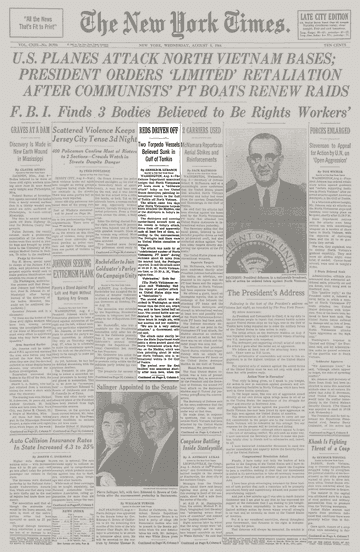
    On August 3rd, 1964, the New York Times posted an article stating that the US ship, the Destroyer was attacked unprovoked on routine patrol. However, this is not true. Many of the information that they shared was untrue, exaggerated, and only came from the US government. The use of only one source is a strong cause of misinformation, leading to propaganda. An article shared on August 5th with the title “U.S. Planes Attack North Vietnam Bases; President Orders 'Limited' Retaliation after Communists' PT Boats Renew Raids" struck fear into millions of American citizens. Once again, this article only provided information from the US government, the majority of citizens believe the information they read without any doubt, especially if they are told the information comes from the government. 


The New York Times was not the only publication to share this propaganda. Time Magazine aimed to publish a summary of the events that had occurred. Immediately it was clear that the US was the victim in this series of events. The US ship was patrolling innocently near the "the shores of the diabolical Red states". The article portrayed the US as heroes during the August 2nd attack. The ship was actually 30 miles off the shore, but it was reported as 15 miles off the shore. This difference allowed citizens to believe this was an unprovoked attack. Had they known it was further, citizens may have begun to understand that there was clearly some reason an attack was taking place. 


    False, specific information was published regarding the attack on August 4th. Once again, this just increased the credibility of this information among citizens. The article ended with this, "At week's end U.S. forces around the world stood alert. And behind them stood their nation.” There is no doubt that this article was propaganda. Falsehoods and misinformation were shared in a direct attempt to influence public opinion on a political matter. 

    These articles fueled negativity towards Vietnam and made citizens feel as though the US needed to be more involved due to direct attacks on the nation. They were led to believe the US was attacked twice unprovoked. This false information absolutely would encourage citizens to increase hatred towards Vietnam. This allowed citizens to feel that the Gulf of Tonkin resolution was absolutely necessary. The government was able to justify their aggression and war involvement through the use of propaganda. American citizens were given false information to falsely support war involvement. 

    Again in 2003 the US government used propaganda to justify the the illegal government invasion in Iraq. The government launched an attack to oust the regime of Saddam Hussein. This began an 8 year war that the majority of citizens felt was not necessary. Following 9/11 many people were able to accept the use of military force after Bush declared a "global war on terror". The Bush administration used this to their advantage. They began fueling the public with more information about the wrongdoings of Iraq and the danger they pose to the US. This led Americans to believe they were at risk of being victims to weapons of mass destruction. The actions of the military now had support from the public. United States citizens now felt it was necessary to take action against Iraq. However, this attack was not legally justified. Government officials attempted to gather evidence that justified this use of force. They constantly said even if there wasn't strong enough evidence, it was too risky to not take action. Just like the Gulf of Tonkin, the United States citizens were provided information from the government in order to influence their opinion and justify the use of military force.


Monday, February 10, 2025

Blog Post #6

 EOTO Presentations

       After watching everyone's presentations, one of the technologies that stuck out to me the most was the invention of the radio. While the radio is an incredibly common technology, popular all across the world, the creation and evolution of this technology fascinated me. 


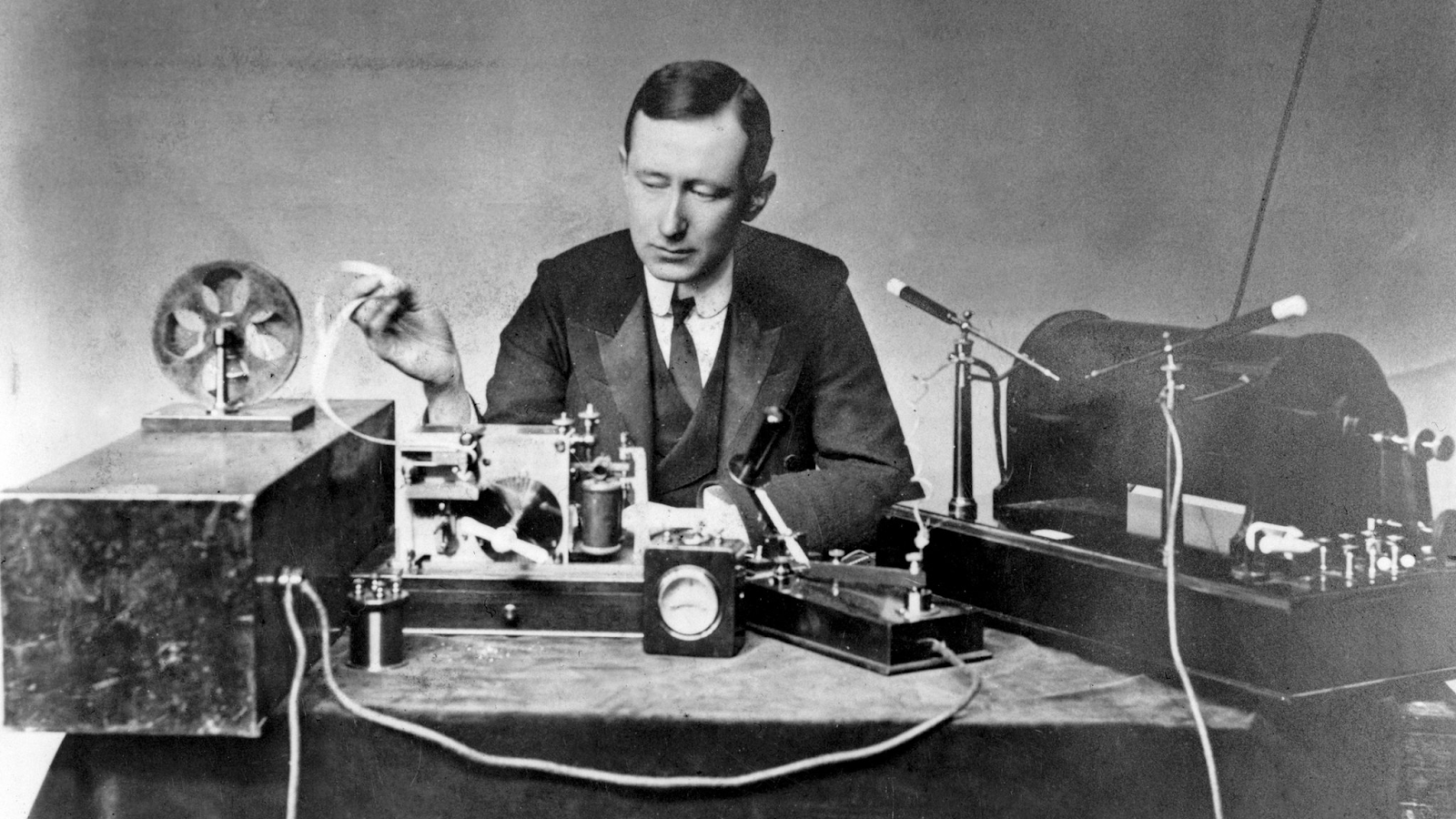
    The first long distance radio transmission occurred in 1896. This action was performed by the Italian inventor Guglielmo Marconi. This transmission was sent approximately a kilometer with the words "can you hear me". In 1901, he became the first person to transmit signals across the Atlantic Ocean. Marconi then began the company "Marconi Radio". This company remained popular until the late 20th century. In 1906, the first transmission of music and speeches happened. Reginald Fessenden produced a radio signal from his studio in Massachusetts to as far as Norfolk, Virginia. This was revolutionary. It was the first AM broadcast and it completely changed the radio industry. 


     I also learned that radio was primarily used to contact ships that were out at sea. Radio technology was used by those out at sea to communicate with operators. When the Titanic disaster occurred in 1912, it was determined that having proper radio equipment and radio operator would have potentially made this disaster avoidable. Following this, the 1912 radio act was passed. This act outlined that all ships must have the appropriate equipment and a certified operator. Marconi's technology was used heavily on these ships. This technology was incredibly beneficial in WWI for American forces to communicate messages to those out at sea. However, WWII really helped to popularize radio. Radio began to inform the public about the events taking place during the war. In the United States, it became a way to distribute propaganda all over the nation. But, it was also used by those fighting in the war to communicate strategy and intercept enemy information.

    Following WWII, FM radio became incredibly popular in the 1940s. FM radio helped to produce mass media, music, information, and speeches were now broadcasted globally. Following this, in the 1950s, disc jockeys or DJs gained popularity. DJs began performing and producing music to be played on FM radio. The culture created by DJs helped popularize music over the radio. Radio talk shows also became incredibly popular in the late 1900s. In the 1970s, Howard Stern popularized these shows. He still remains one of the most prominent radio hosts in history. 


     In the early 2000s, two radio companies, Sirius and XM combined into one, known as SiriusXM. This made it easier for both companies to reach more consumers. They partnered with car companies to give consumers a few free months of this radio service after they purchased their new car. This partnership helped increase the popularity of nontraditional radio. People were now willing to spend money to gain access to more channels. In today's world, radio is unfortunately seeing a decline in popularity. Mobile devices and smart phones have made it easy to listen to anything at anytime. The biggest change came from podcasts. Podcasts have taken over. Podcasts have also transferred from traditional radio to different streaming platforms. Companies like Spotify and Apple Music have benefitted heavily from this. Overall, while radio had an incredible impact on shaping our communication history, it has unfortunately been on the decline due to technological developments. 

Blog Post #5

 Online Privacy

    Learning about the lack of privacy we have online is quite honestly terrifying. This idea of "electronic tattoos" gave me a new perspective on the permanency of everything I do online. Not only is it permanent, but it becomes the way people see you. Your actions online now become a representation of you. No matter how long ago or any changes you go through, your online actions still represent what people think of you. As someone who grew up when social media was first becoming popular, I was exposed to it at a young age and began my own social media accounts when I was 13. From the age of 13 to now, I am a completely different person with a completely different view of life. My parents have always taught me it is important to be conscious of my actions online because they understand how permanent they are. While I think that there is not anything that could do serious damage, I certainly would not post or say some of the things that I once did. I find myself looking back and regretting old posts or even regretting the texts I sent. It is scary to think that my actions years ago can impact my future career. I personally have had friends who got in trouble with their school or even law enforcement for things they did or said online. Not only that, I have seen friends not get jobs because of their social media. My boss this summer told me that someone's social media can absolutely influence which candidate gets the job. That has stuck with me ever since and everyday I try to be conscious about what I post. 

    The second video truly highlighted how much we are monitored. Once again, assumptions and personas are given to us by outsiders based off of where we drive or where we are. I do not personally believe that the government has the right to monitor each citizen this closely. The use of advanced surveillance techniques on citizens who have not proved to need to be watched is an invasion of privacy. However, I find this to be less concerning than the permanency of our online data. With all of the current safety issues in society, it is important to be able to track people or get footage of an event, but, the average daily life of citizens should not be used to make generalizations about someone. The fact that most people, including myself don't know that their data is being gathered to this extent is something I feel needs to change. I believe the government and even other organization need to be more transparent about the data they gather. This surveillance technology has become too invasive and weaponized in a way. It is like they are jut waiting to catch someone committing a crime, they are not using this technology in a way that benefits society. The government must start acting for the betterment of society, not for their own goals. 


    The third video followed very closely with the ideas I just previously discussed. The government being upset by the fact that they cannot automatically access our data is an incredibly clear violation of our democracy. Cellphone companies taking matters into their own hands is something people need to know. A conversation had with a friend does not need to be heard by the government. Ensuring the use of encryption technology is something that I will absolutely be mindful of to protect myself and my privacy. When wire tap technology was first used, it felt similar to other tracking technology in the way that the government is trying to catch something before it occurs. They are surveying based off of no probable cause but they can claim it is beneficial when they do catch something. I do not believe that is fair, in my mind it is similar to the idea of prior restraint. While obviously not directly the same, the government is monitoring people before they have proved they have done something wrong. Securing my phone calls needs to become a priority in my life. I plan to do more research on how to do this and implement these techniques. The last video shared more in depth about the lack of support from the government when you are wronged on the internet or data is stolen. In order to progress as an online society, the government must begin to protect out rights online. However, this change has to be started by the people. Advocacy for the dangers of our online data being so readily available must happen. 

Thursday, February 6, 2025

Blog Post #10

 Living in the Age of AI 

    AI has become integrated into all aspects of our daily lives. While this technology has proved to be beneficial due to its ability to analyze information and generate never seen before solutions, there are pitfalls that come with this technology. This technology has transformed many industries, providing benefits in healthcare and other research fields. However, in the production industry, AI has replaced the need for human labor. The CEO of Fanuc Robotics believes that where there is a job taken, two more are created. However, community members disagree. The first thing I found interesting was hearing from the social worker about the intergenerational effects of losing jobs due to AI. The negative impacts were extensive, including repeating a grade, dropping out of school, and overall lower educational experience. Also, it was incredibly interesting to me to hear how AI increases the economic inequality in the United States. Mr. Kaplan said that the idea of the struggle between capital and labor brought to us by Karl Marz is correct. This is so fascinating to me because a philosopher from the 1800s accurately predicted an economic situation that was caused by brand new technology. The fact that the general consensus from the people in the beginning of this video was that AI is going to cause inequality and economic trouble for so many people that it will be hard to come back from was terrifying to me. As someone entering the workforce soon, it is concerning to see how many jobs are being replaced by AI. 
    AI has also played a huge role in data collection. This video discussed how the "world can become adapted to you" because AI analyzes the data it collects from you to tailor content or advertisements to fit your desires. However, this does pose a privacy concern. The people in charge of these companies could unfortunately use your data in negative ways, or even sell it to foreign nations. The whole idea of "surveillance capitalism" is also very concerning. As explained, human experience is being transformed into predictions of behavior that is sold to companies. This is something that more people should be aware of. The shift in our economy and the overall business world is astronomical because of AI.

Uploading: 5902232 of 5902232 bytes uploaded.

     The man sharing his experience with a Google engineer about how you should be horrified about the amount of information they have about you is definitely a cause for concern. While I may not feel there is something to hide, my privacy is still important. Our data is almost like a form of currency, no one is truly focussed on protecting our data. The integrity of organizations has been compromised because of their need for money. Businesses realized how important data is in predicting human behavior. They knew that they could gain large advantages over other organizations by selling other companies this data. For example, when Google started selling data, their revenue line increased by 3,590%. This goes to show how valuable this data is. Companies like Google and Facebook gained data from so many different sources that it was quite concerning to me. While I can understand gaining some information for targeting advertisements, as it can be beneficial to me as a consumer, trying to gather their credit card data or even a woman's menstrual cycle data is in my opinion taking it a step too far. 

    After learning more about the Facebook scandal in 2018, I fear for the integrity of our nation. The fact that a British company was able to purchase all of this data, and attempt to influence the 2016 election is a direct threat to our democracy. Our nation was founded on being able to use our voice and voting power to make decisions, not that another country can exercise control and affect who are leaders are. Voting should not be impacted by our online data and who has access to it. While I will continue to believe that AI technology provides benefits in so many ways, the farming of our data is something that needs to be taken more seriously. The people in our nation must be aware of what is truly going on with their data. 

Monday, January 27, 2025

Blog Post #4

 Evolution and Impact of Motion Pictures

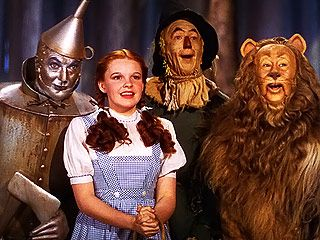
    When you think about motion pictures, you see vivid images, bright colors, sound effects, famous actors, advanced plot lines and so much more. Everyone has a favorite movie, whether it's from your childhood or it just came out. They are such an important part of our society, telling both fictional and non-fiction stories about recent events. Not only do they bring in over 100 billion dollars in revenue, they help to bring people together and create incredibly strong fan bases. However, movies did not always look like this. While they have always been a method of visual storytelling, they did not start looking like what we picture until 1939. In 1939, the first full length, color movie was released. Motion pictures have a rich history, constantly undergoing massive changes. 


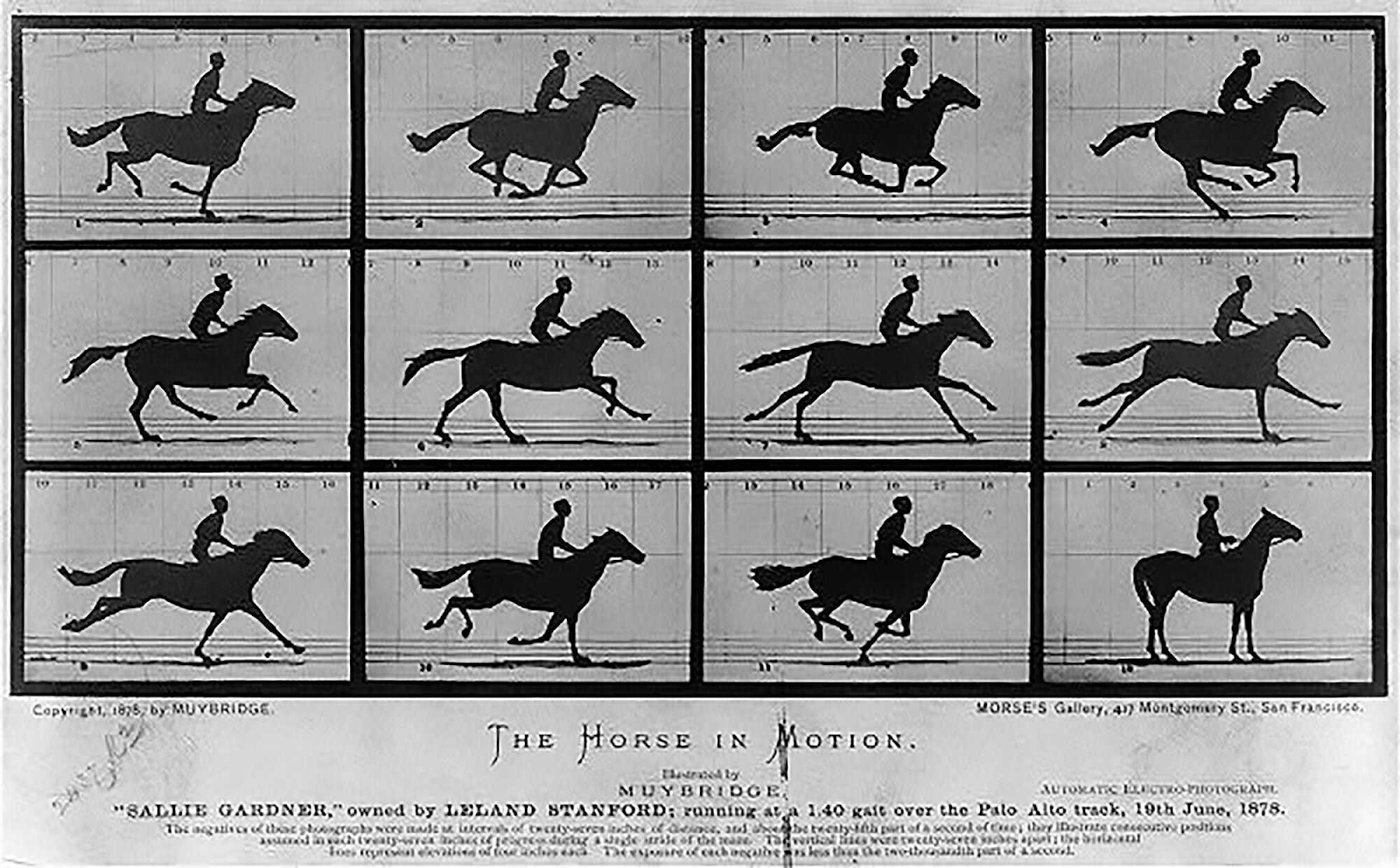
    The first representation of a motion picture comes from something known as a "zoetrope". A zoetrope allowed a series of pictures to be shown rapidly to give the appearance of movement. Following this, a bet placed between colleagues in California about whether or not a horse had all four hooves off the ground during its stride led to the formation of a "zoogryoscope" this allowed 12 images to be showcased in rapid succession. Then, a French physiologist developed a camera that could take 12 pictures per second of a moving object. This was caused "chronophotography". These two techniques led to the foundation of motion pictures. 


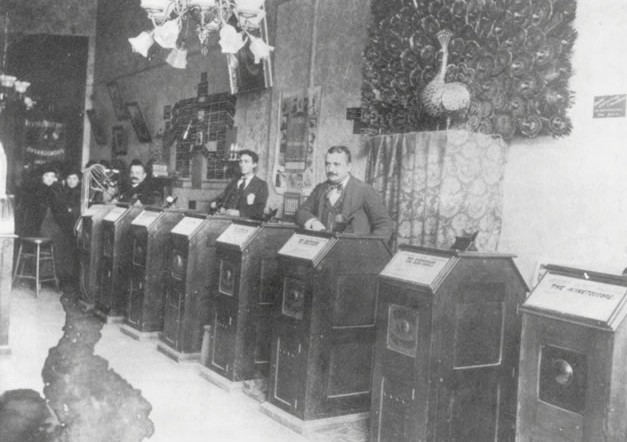
     Following the work of these individuals, the Silent Film era began. From 1894 to 1929, hundreds of films consisting of moving images were introduced. This was also the first time movie stars were recognized. Charlie Chaplin, Laurel and Hardy, and Harold Lloyd are just some examples. Again, silent films have to build a strong foundation for what movies are today. Following this, sound was introduced into films. Edison first used a phonograph to play music alongside these moving pictures. Then was the development of the "vitaphone". Warner Brothers began to use this technology first. The first film with sound was Don Juan in 1926, followed by the Jazz Singer in 1927. Color films were introduced in 1908 with a British short film. The Kinemacolor process was revolutionary in allowing for the development of color films. Color added another dimension, sophistication, and a higher level of expression in film. 


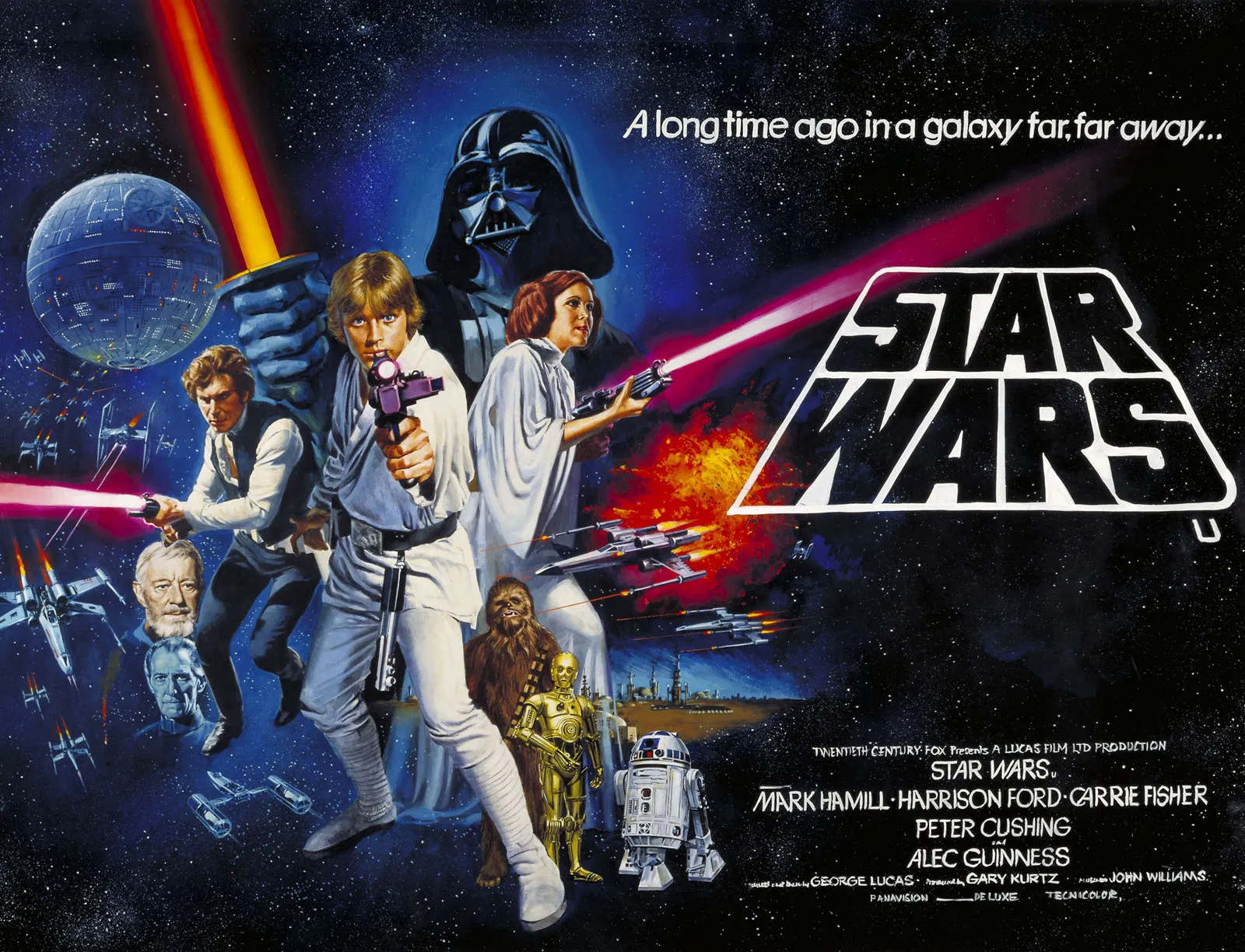
    Blockbuster movies changed the movie industry in the 1970s with the release of Jaws (1975) and Star Wars (1977). Special effects, computer generated images, and advanced story lines helped to transform the film industry. Star Wars was key in revolutionizing this technology. Visuals became much more advanced and allowed for exciting settings like space. Films such as E.T. the Extra Terrestrial (1982) and Jurassic Park (1993) continued to revolutionize the movie industry through the use of fantasy elements created specifically for each film. Movies during this industry were no longer representations of plausible events, an element of fantasy was created. 


    Overall, movies have had incredible influence on our society in so many ways. Not only do they bring in incredible amounts of revenue, but it went from storytelling to something fans can be a part of. Merchandise, toys, and other goods are created for every popular movie. Each movie series causes a development of strong "fandoms". Movies are not just movies anymore, they are a community. Movies also serve as a way to showcase historical events or the stories of influential people. They allow us to connect deeply with people all over the world. Streaming platforms have also revolutionized the movie industry. People all over the world now have access to hundreds of movies at anytime on any device. People can watch from the comfort of their own home which has increased streaming numbers. Technology also continues to improve every single day. Movies are not only in 3D, but 4D allowing for immersive experiences. It is impossible to know what the future will hold, but I am excited to see the continued development of motion pictures. 


Thursday, January 23, 2025

Blog Post #3

 The Values of Free Expression

    Free expression in the United States has become an increasingly important topic, especially recently. With the attempted ban of TikTok, many individuals feel as though their right to freedom of speech has been infringed upon. The decision made by the Supreme Court to ban TikTok unless it is sold, is one that concerns people. Many of the Justices were not sure whether or not the First Amendment applied to shutting down a social media site. This idea and precedent established by the court could lead to more censorship or social media bans in the future. Throughout history and even in today's world, the battle for free speech continues. Free speech is incredibly important to the development of society. 

The eight values of free expression come from the ideas of powerful thinkers and writers to outline the necessary principles that must be protected under the first amendment. In summary, these principles represent ideas such as the ability to express your opinion without censorship, self-governance, and holding both the government and other citizens accountable.  These values help ensure our democracy not only continues to stay a democracy, but a place where people are able to express their opinions. Below, I have listed my top three values of free expression and my reasoning behind each one. 

1. Protect Dissent

    In our politically charged world, people are often victims of discontent from the suspected "majority" view of the nation. Publicly, there is pressure to abide by the democratic view and support all progressive movements. Any differing viewpoint is often shot down and the person who expressed their own opinion becomes a victim of cancel culture. The American people have the freedom and the right granted to them by the Constitution to share their opinions on the current government and the party that they align with. One example that stuck out to me came from our discussion in class regarding the idea of viewpoint discrimination. In Massachusetts, the Republican party is in the minority. One of my classmates discussed how he was not given a permit to hold a Trump rally by the state of Massachusetts. That is a clear violation of our first amendment rights. Not only is it a violation, it is allowing the "majority" in one state to stop their opposition from sharing their views. It encourages that "mob mentality" idea, allowing one view to dominate. In my mind, this is one of the most important values of free expression. No matter your political affiliation, you should not be punished for aligning one way or another. Allowing minority views is also how things change. Nothing would ever change in society, politically, technologically, or socially if someone had not shared a new point of view. Especially in the government. Starting all the way back in the 1700s, the Pilgrims escaped an intolerant government. Our country was founded on sharing our feelings to keep the government in check. 

2. Promote Tolerance

    Promoting tolerance is the second value that really stuck out to me. People, especially on social media have created this idea of being "woke". Anyone that does not abide by their idea of what is right to say is bad and should not have a platform to speak. Facebook and Twitter are known for the removal of "hate speech" or things that do not abide by their guidelines. Elon Musk was critical in restoring this idea of tolerance on social media platforms. While there still are consequences for negative or hateful speech, the idea of completing banning someone from a platform was something he heavily disagreed with. Banning accounts is direct censorship, however, smaller consequences from the platform or the public are not. The idea from Bollinger essentially says that allowing hate speech will ultimately teach us to be more tolerant and other ideas, but also that we will self regulate. People will face consequences for what they say if it is negative. John Mill also states that this idea of tolerance promotes the discovery of truth and that is is critical to have ideas that challenge what we know to incite change. The Constitution protects hate speech in order to keep conversations happening. This allows us to limit our government and promote change. If hate speech were to become unlawful, conversations that are needed to retain a democracy would no longer be had.  Overall, in order to maintain our democracy, hate speech must remain. Society will take care of the consequences. Additionally, it will allow everyone to realize there are multiple ideas on one topic, we will be more tolerant of these ideas. 

3. Check on Governmental Power

    The third value that stuck out to me was the check on governmental power. As we discussed in class, our freedom to discuss our displeasure with the government acts as part of the check-and-balance system. Not only are we able to discuss displeasure to incite change, but we are able to expose the wrongdoings of the government. Without this, government officials would be able to get away with many secretive acts. One of the examples that sticks out most in my mind was when Hillary Clinton's private e-mail account was exposed. The public would have never found out ab out this and no investigation would have been launched without the protection of the first amendment. While the investigation did not reveal anything of great importance, it is our right to ensure the wrongdoings of government officials are investigated or exposed. Keeping our government in control and acting in the best interest of the American people is one of our duties. The Constitution specifically added in our ability to "check" the government to avoid infringements on democracy. Overall, in order to maintain a government that acts in our best interest, people must be allowed to share or expose the wrongdoings of the government. Even if it is not wrong, sharing the actions of the government allows for conversation to be had. People are able to form their opinions and then decide whether or not change needs to happen. 

Wednesday, January 22, 2025

Blog post #2

 The US Supreme Court Reflection

    The US Supreme Court is an integral part of the justice system in our country. The Supreme Court has established incredibly strong precedents through applying the Constitution that have shaped our nation. The Supreme Court, made up of 9 justices each with lifetime tenure are some of the most important people in the framework of our nation's legal system. 
    Growing up with an attorney as a mother, I was exposed to the law incredibly early in my lifetime. However, not Constitutional law. I was aware of the importance of the Supreme Court and how precedents shape the way in which our country's court systems rule on cases. In the first video we learned about all of the details within the process itself. One of the first things that struck me as interesting was the fact that at the time this video was released, there were only a little over 100 Supreme Court Justices. The idea of lifetime tenure was something I had heard of before, yet I did not realize truly how few people have served on the Supreme Court. Second, I learned that the Supreme Court receives over 100 cases a week and 7,000 per year to review. I had not yet understood the number of cases that made it to the Supreme Court and then had to be reviewed by the court. 

    The individual nature of the Court was also something I was previously unfamiliar with. Each Justice taking the time to review all of the cases and then having a weekly conference was new to me. One of the things that stuck out to me the most was how the associate Justice had established a sort of "rule" that in each conference, every Justice must speak once before another can speak twice. This idea helps to ensure that everyone's ideas are heard in a fair manner. I believe this reflects similarly to the whole idea of the Supreme Court. Justice Sandra Day O'Connor explained that the process for granting or denying certiorari requires every petition to get the same individual consideration. She said that it did not matter if the petition was written by the top lawyer or a prisoner in his cell, they were considered the same. This unbiased process shows the importance of equality in the legal system. The conferences overall remained fascinating to me. The idea of letting everyone share their ideas and hear one another's is what allows for opinions to change. Justice Clarence Thomas said that he often goes in with his own opinions, usually they do not change but this system established has changed his mind a few times. In my mind, this establishes a strong and equal system. My confidence in the Supreme Court has grown due to the fact that it is apparent they are trying to make the system unbiased and make decisions purely in the most ethical way. 
When watching the second video, I learned more about the actual process that goes on once the court accepts a case. Once again, to establish equality in the court, each attorney is given thirty minutes of oral argument before the nine Justices. No one is granted more time than another, this ensures no advantage towards either side. The Justices are able to use the arguments of these attorneys to make their decision. After hearing the argument, the following days consist of deliberation. The Justices debate to determine the majority decision. Once a decision is made, one of the Justices on the majority side is instructed to write an opinion. The opinion declares the reasoning behind the decision made. This is incredibly important because as explained in the video, this decision "binds all other courts as they decide future cases". I did not know that any Justice on the other side can write an opinion dissenting the decision or concurring in the result but disagreeing with the reasoning. It is fascinating to me that the opposing idea can be released publicly. However, again this contributes to the transparency of the Supreme Court. 

    Often you hear that the Supreme Court is secretive, biased, and politically motivated. However, after watching both of these videos I would disagree. Hearing from each of the Justices and listening to them explain the gravity of the situation they are in humanized the court. They know that each one of their decisions can change the course of history and the laws that govern it. The precedents established are necessary for change, but they understand they can often be controversial. The unbiased screening process and the publication of opinions is something that everyone should be aware of. In my opinion, it is incredibly important to take away the attempts from the court to remain transparent and unbiased. It is also important to remember each Justice is a human that comes into their position with their own ideas and ways of interpreting situations. They simply do their best to act ethically and provide a fair legal process. The idea that Justices often take 3 to 5 years to get acquainted and comfortable shows that they feel the pressure they are under. It is not an easy job trying to act in the best interest of all the American people. 

Friday, January 17, 2025

Blog Post #1

 My Top Five Sources of News and Information

    News and information sources can often be overwhelming these days due to the increase of digital media and the overall increased use of technology. Every day people are exposed to hundreds of different opinions on the same story which can make it difficult to interpret the true facts of the story. Major news platforms can report the same story but both publish different headlines that display two completely different meanings. Headlines are often incredibly misleading as well, the brief synopsis leaves out critical details that actually make sense of the story. Social media sites are full of creators with their own biases, I personally do not find them to always be a reliable source of information. However, I do obtain much of my news and information from them because they are easily accessible. My top five sources of news and information are Fox News, 
 Headline Differences


1. Fox News

    While this may be regarded as a controversial first source due to the right learning nature of this news outlet, in my opinion this is where I learn the majority of my news and information. Growing up, this was always on the TV in my living room when I got back home from school. Even when visiting my extended family members, I was watching Fox News. Today, I receive daily emails from them with new information. As one of the most popular news sources in the country, they have millions of viewers. This helps eliminate some of the bias as they are trying to provide accurate information to a large population. I personally feel as though Fox News delivers information quickly and constantly provides updates. Providing live coverage is beneficial to continue to learn updates in a particular story and allows me to get all of the information possible. Even during my research today, I was able to receive live updates regarding the hearing of Pete Hegseth. It is important to me to see the story unfold and then form my own ideas based upon the fact of the situation. However, it is apparent to me that my upbringing surrounded by Fox News led to this being my top source of news and information. 
Link to Fox News: Fox News

2. New York Post 

    Once again, my second source is influenced by my family. When I was younger, my mom would always sit in the kitchen reading the New York Post on her laptop. She would always share articles or stories she found there. When I got older, I began to also read the New York Post. In my mind, the New York Post is a a combines both traditional and entertainment news, making it a perfect place to hear about current events in all industries. It is definitely not the most informative due to its focus on "celebrities", but I find it to be a relevant source. Each story is relatively short, not giving too much detail but it makes it an easy read. They also incorporate many images and videos into each article. It is a great place to get information quick in an entertaining manner. 
Link to New York Post: New York Post

3. ESPN

            ESPN Logo
    My third source is ESPN. As a sport management student, it is incredibly important for me to stay up to date with everything going on in the sport world. The entire industry is changing daily due to the House settlement and new regulations. Also, different sports are growing in popularity, especially women's sports. Staying up to date on this growth is crucial to know. I also am a very big sports fan in general. I like to follow my favorite teams, but just each sport in general. I often read stories about various trades, new rules, player injuries or even changes in management. I also enjoy that they include videos from their shows into the articles, in the car I will often just play the video rather than reading. ESPN is a great place for me to get all my necessary sports information, but also a place for me to read about the things I love. 
Link to ESPN: ESPN

4. Instagram

                      Instagram logo

    My fourth source is Instagram. While it may not be the most reliable source of information always, as a teenager in today's world, social media plays a big role in my life. I follow hundreds of accounts that share information daily. This information ranges from current events, sports, celebrities to even information about my friends. Instagram connects me to people all over the world. My primary use is keeping up with family and friends. However, I do follow many news channels such as Fox News, ESPN, and the New York Times to be updated through there as well. Instagram is not a great place to learn the full, unbiased story; but I am exposed to headlines which then I am able to choose what I am interested in and do further research on the topic. Overall, it is a source of entertainment and a place to keep up to date on a wide variety of topics. 
Link to Instagram: Instagram

5. Local News

              WBTV Logo

    My fifth source is my local news outlet. My local news at home is WBTV. When I am home, my parents and grandparents are always watching the local news. It is very important to me to stay up to date with the local news as these events affect everyone around me. I also consume the local news through social media. I follow the local news on Facebook and Instagram. This provides quick updates on current events. I usually get my traffic and weather information from my local news station. The local news often highlights different community members as well. For example, my brother's lacrosse team just played in the state championship and they were showcased on the local news. The local news is a great way for me to get information relevant to me and stay connected with my community. 
Link to WBTV: WBTV

Blog Post #12

 My Relationship with Technology     As a teenage girl in today's digital world, it feels like my whole life revolves around my phone. C...